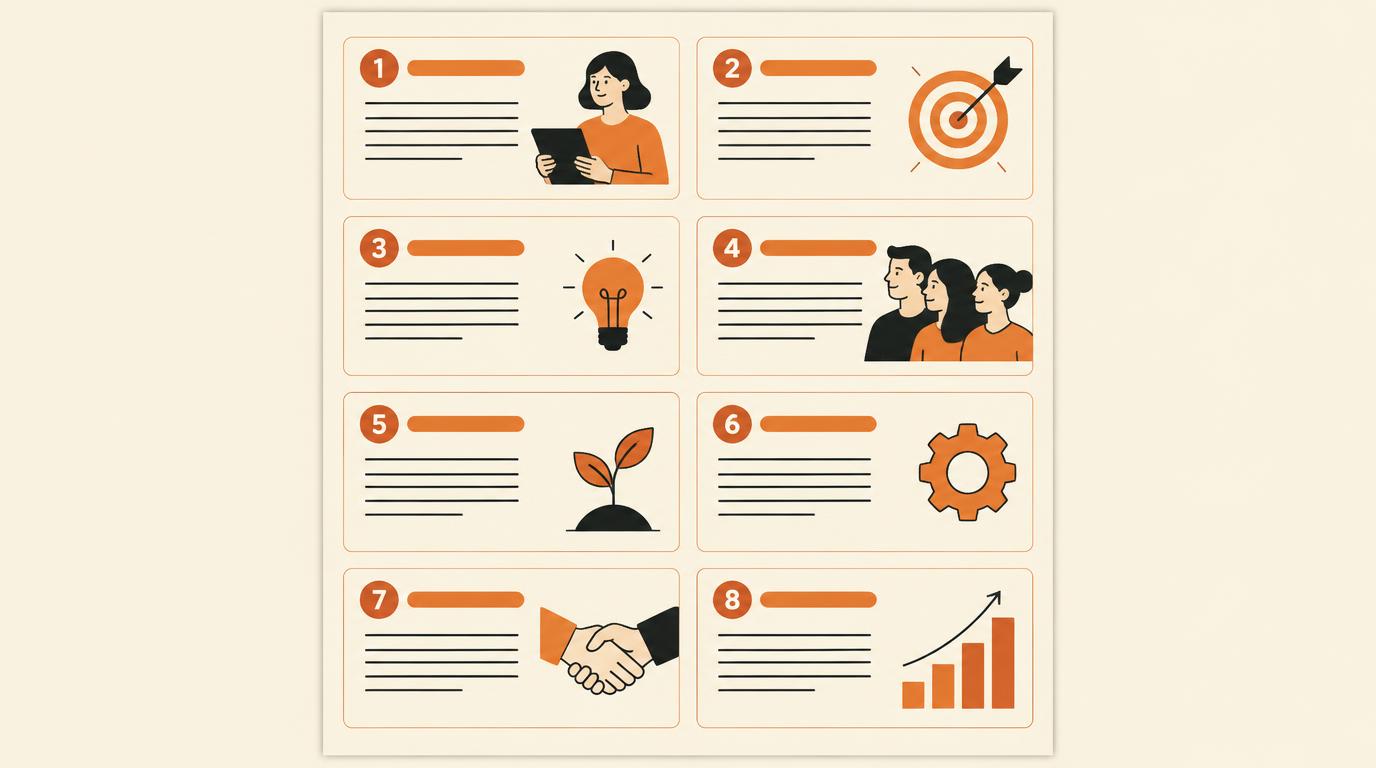
Founders don't read 40-page audits. They read a page that says what was measured, what changed and what to do next. This structure follows the public heyEO demo report.
1. When it was measured
Start with the date and time. Every figure below depends on it.
2. How much was measured
Give the size of the sample. Our 31 Oct 2026 demo lists 278 checks, 3 prompts and 11 recommendations, so readers know how much evidence sits behind the figures.
3. What the report doesn't claim
One plain sentence, such as: "Nothing here is attributed to a cause." It builds trust fast.
4. Site findings, counted
Failing, warnings and passing, with what wasn't checked. Label these as deterministic: the same input gives the same result.
5. AI answer measurements, labelled as samples
Mentioned, abstained and no mention for each provider. Say clearly when no answers were recorded.
6. Audience evidence
Who the site appears to be for: company size, roles, pain points and buying triggers. Compare it with the audience you intended. See what ICP drift is.
7. Recommendations with effort
A short, ordered list with an effort size for each item. Small fixes first make the report easy to act on.
8. Comparison with last time
Once there's a baseline, show what moved. Without one, say "No baseline yet" rather than guessing. Read why the first scan matters most and our guide to reading your report.